
MaPo

Forum Replies Created
-
AutorPostitused
-
MaPo
Memberhttp://suppversity.blogspot.com.ee/2014/05/many-small-meals-suck-especially-for.html siin on 2 suurt toidukorda – kus ära jäetakse õhtusöök positiivse mõjuga. Kokkuvõttes võiks ikkagi tõdeda, et mõneti on ka see individuaalne ja üldistada ei ole väga ratsionaalne.
Igal juhul – õhtused süsivesikud ei lähe rasvaks kui üldine kaloraaž kontrolli all.
Memberhttp://onlinelibrary.wiley.com/doi/10.1002/oby.21049/abstract Overall, this study showed that the adverse effects of skipping breakfast (higher insulin and FFA responses to lunch, increased hunger, and decreased satiety) were found primarily in habitual breakfast eaters. This suggests that meal skipping may have enhanced effects in habitual Eaters due to entrainment of metabolic and appetitive regulatory systems.
Memberhttp://suppversity.blogspot.com.ee/2017/01/starting-to-have-breakfast-is-worst-new.html
“So, practically speaking: Everything people who criticize the notion that “everyone should have breakfast” argue against this overgeneralizing bogus advice happened; and that’s in total opposition to the alleged benefits the mainstream promotes, of which none was observed.”
https://www.ncbi.nlm.nih.gov/pubmed/28063876
“
CONCLUSION:
The findings of our study showed that requiring non-breakfast eaters to eat breakfast resulted in higher caloric intake and weight gain.
MemberJah, hommikusöögi osas on täheldatud küll neid ülalmainitud efekte, mis ei lükka ümber, et teistmoodi ei oleks kokkuvõttes parem/sama hea. Mina ise ei suuda ilma toitumata hommikul liikuma saada ja ei propageeri ka seda vägisi teha teistel aga kui kellelegi sobib, on uuringuid, mis näitavad, et hommikusöögi ärajätmine võib mõjutada positiivselt üldiselt madalama kaloraažiga päevas hakkama saada. Seega, kui oled ülekaaluline ning näed vaeva, et kaloraaži vähendada, on see üks võimalus.
Siin on üks, teatud aspektidest kõnelev kokkuvõtte (viited ka) https://www.precisionnutrition.com/skipping-breakfast-and-obesity
Specifically, there’s very little evidence to suggest that skipping breakfast will cause you to get fat.
Sure, we can establish a correlation between skipping breakfast and being overweight. But many factors — from genetics, to a general lack of interest in health — could explain this relationship. We just don’t know that one causes the other.
detsember 12, 2017 at 10:15 e.l. in reply to: Tervislikust toitumisest konkreetselt: II osa… #356967MemberMida aga näivad mitmed uuringud näitavat, on see, et mida vähemate toidukordadega hakkama saad, seda parem on asi üldtervise seisukohalt – kahega oli isegi mõnes parem tulemus, kui 3-ga. Aga arvata võib, et tavainimesele võib see vahel ekstreemne tunduda (mitte, et neid, kes näiteks hommikust üldse ei söö, vähe oleks). Igal juhul – see vahepalade propageerimine, mida teatud ringkonnad harrastavad – sel ei ole hetkel küll väga tugevat põhja. Jutud veresuhkru langemisest või ainevahetuse seiskumisest vms – natuke lihtsustav lähenemine. Isegi valku ei ole iga 3 h tagant tarvis, kui saad 3 korda päevas oma 30-50g toidukorraga kätte.
MemberKommenteerimata hetkel sisu, lihtsalt teadmiseks, et see “nutrition”facts””. org on täielikult veganluse kallutatusega allikas, milles levitatav on täpselt nii palju tõsi, kui nende agendaga sobib. Väidetav “uuringutel põhinev” sisu = nopitakse ainult need välja, kus leitakse, et veganlus on parem kui tasakaalustatud omnivoorlus. Võimalikke negatiivseid efekte või loomse päritoluga toiduainete eeliseid ignoreeritakse, jne. Üldises plaanis – selliseid tõendeid üheselt ei ole, mille põhja loomse täielik vältimine kuidagi “tervislik” oleks….veel. Taimse osakaalu suurendamine ja loomse vähendamine – jah, võiks olla eesmärk – see on põhjendatud; range taimetoitlus, hetkeandmete põhjal – mitte.
detsember 11, 2017 at 12:14 p.l. in reply to: Tervislikust toitumisest konkreetselt: II osa… #364447MemberNäide ka sellest Antsoni kirjutisest:
“Järgnev informatsioon ei ole huvitav teooria, vaid on minu praktikas kinnitust leidnud tõsiasi.”
– tema praktika ei puutu asjasse, ennekõike loebki universaalne “teooria”.
detsember 11, 2017 at 12:12 p.l. in reply to: Tervislikust toitumisest konkreetselt: II osa… #364653Member1. Just nimelt – see on ÜKS võimalikest strateegiatest. Sellest aga, mis ajal keegi oma makrotoitained makku saab, ei sõltu suures pildis midagi – on detaile/nüansse, mis mõjutavad muud – enesetunnet, hetke tervisenäitajaid, jms – aga need on individuaalsed. On neid, kes vajavad heaks uneks süsivesikuid, on neid (IF järgijad), kes toituvadki nii, et alles hilisel pealelõunal süüakse midagi ning nö põhikalorid tulvadki alles hilisest õhtusöögist – ja nendegi vorm on hea.
Nii lihtsalt ei ole korrektne väita nagu teie seda tegite. Eriti see osa, kus õhtune süsivesik muutub rasvaks.
Muus osas oli kõik korrektne.
2. Vormil ja kogemusel ei ole viga midagi, need lihtsalt ei ole tänapäevae diskussiooni argumendid – ainult sellele juhtisin tähelepanu.
Member“Süsivesikute rikkad toidukorrad peaks kindlasti jääma rohkem hommikusse, lõunasse, enne ja pärast kehalist aktiivsust. Muudel aegadel võiks toidukorrad olla süsivesikute sisalduselt lahjad, suurema valgu ja kiudainete sisaldusega. Eelnevalt kirjeldatud süsivesikurikaste toitude ajastamine tagab selle, et need süsivesikud ei salvestu rasvadena”
Täiesti pseudo-teaduslik bro-science. Põhineb mingitel iganenud või muidu arusaamatutel teooriatel.
Kui seda väidate, oleks mõistlik tuua korralikud kinnitavad viited – millegi muu, kui “enese kogemuse”, “vormi”.. vms näol.
MemberConclusions: Current evidence shows no adverse effects of higher protein intakes. Although there were positive trends on BMD at most bone sites, only the LS showed moderate evidence to support benefits of higher protein intake.
Member“Popovich’s recent analysis of data of the link between protein intake and net protein balance in weight training individuals that confirms two things: (a) there’s still way too little data to make definite statements about the existence of something like a saturation effect, and (b) the RDA of 0.8g protein per kg body weight is way below the 1.35g protein per kg body weight, Popovich calculated as the minimum to achieve net protein balance and thus preserve muscle mass (in that, I assume that the net protein breakdown with <1.35g/kg would come from muscle protein - at least in parts)"
Member-
Meta-analysis of 17 subgroups from nine studies says you need >1.35 g protein/kg body weight/day to optimize muscle anabolism (Popovich 2017) — Recently, there have been several studies seeking to quantify the “optimal” protein intake for muscle gains in strength-trained individuals. Greg E Popovich’s recent meta-analysis of nine studies that assessed their subjects nitrogen balance is thus a timely review of both, older and novel evidence on the topic. Popovich aimed to
“[…] statistically analyze previously published nitrogen balance studies to find the model that best describes the relationship between protein intake and nitrogen retention, as well as to elucidate significant variable(s) affecting nitrogen retention” (Popovich 2017).
As previously highlighted, Popovich found nine studies with at a total of 17 subgroups for his analysis, which included testing nitrogen retention for correlations against 10 independent variables (protein intake, energy intake, energy balance, average reported daily strength-training duration, lean body mass) using multiple models.
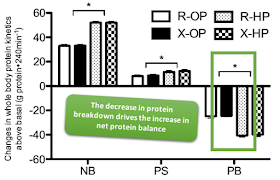
Figure 3: Just in case you forgot what the net protein balance is, and why it is important when we’re talking about ‘gains or no gains’, I suggest you (re-)read my 2015 article about “Net Protein Retention and Dietary Protein” |read it! Popovich’s linear regression model revealed positive correlations between daily nitrogen intake and nitrogen retention (r = .510) which approached significance (p ≤ .06). When normalized for body weight, the correlation became (a) more pronounced (r = .698) and (b) statistically highly significant (p ≤ .006)
What may be the most important result of the study is that the RDA of 0.8g/kg body weight is only ~60% of the amount of protein you need to keep the status quo (0-balance).
When Popovich writes that “the data suggest that resistance-trained persons consume greater than 1.35 g protein/kg body weight/day to optimize muscle anabolism” (ibid.) the emphasis should be on greater – after all, 1.35g/kg is enough only to maintain the status quo of resistance trainees.
MemberTõsijutt, ja midagi ei juhtu ka siis, kui võtad esimest vähem-rohkem-harvem, jne. Kui meelde tuleb, paned teelusikatäie suhu.
MemberOtter, kõik on hästi, ja teada, et sellised artiklid eksisteerivad, nagu ka roti-uuringud 1920-dest, mis leiavad, et valk on kõige kurja juur.
Aga miks te tsitaadi seal ära lõpetate, kust alles huvitavaks läheb:
“A moderate intake of 1.5 g/(kg ⋅ d) may be easily included in the acceptable protein intake range (AMDR 10–35%) for most individuals. However, currently, no objective standard for protein consumption >0.8 g/(kg ⋅ d) exists. It is important to distinguish between the amount of protein that is required to optimize bone and muscle health and the amount necessary to prevent a deficiency. It is also important to note that high-protein diets are harmful to CKD patients; however, for healthy kidney patients, in view of the findings of several studies, the consumption of a high-protein diet appears to be more advantageous than deleterious. In addition, dietary protein seems to play an important role in other metabolic processes, such as satiety, cellular signaling, and thermogenic and glycemic regulation in the body. However, this effect becomes important only when consumption is above the RDI; thus, it seems likely that protein intake above the RDI could be advantageous in many situations. “
Esindate ka väga edukalt kirsinoppijat jätkuvalt.
Memberhttps://www.ncbi.nlm.nih.gov/pubmed/22150425
Our consensus opinion is that leucine, and possibly the other branched-chain amino acids, occupy a position of prominence in stimulating muscle protein synthesis; that protein intakes in the range of 1.3-1.8 g · kg(-1) · day(-1) consumed as 3-4 isonitrogenous meals will maximize muscle protein synthesis. These recommendations may also be dependent on training status: experienced athletes would require less, while more protein should be consumed during periods of high frequency/intensity training. Elevated protein consumption, as high as 1.8-2.0 g · kg(-1) · day(-1) depending on the caloric deficit, may be advantageous in preventing lean mass losses during periods of energy restriction to promote fat loss.
-
Meta-analysis of 17 subgroups from nine studies says you need >1.35 g protein/kg body weight/day to optimize muscle anabolism (Popovich 2017) — Recently, there have been several studies seeking to quantify the “optimal” protein intake for muscle gains in strength-trained individuals. Greg E Popovich’s recent meta-analysis of nine studies that assessed their subjects nitrogen balance is thus a timely review of both, older and novel evidence on the topic. Popovich aimed to
-
AutorPostitused