

Athletic Fitness – sport of strength, endurance and body quality.
Avaleht » Forums » International » In English » Athletic Fitness – sport of strength, endurance and body quality.
- This topic has 42 replies, 10 voices, and was last updated 12 years, 10 months tagasi by
lkv.
-
AutorPostitused
-
detsember 2, 2011 at 4:26 p.l. #23862
AnneP
MemberAthletic Fitness
Sport of strength, endurance and body qualityATHLETIC FITNESS NEW CATEGORY
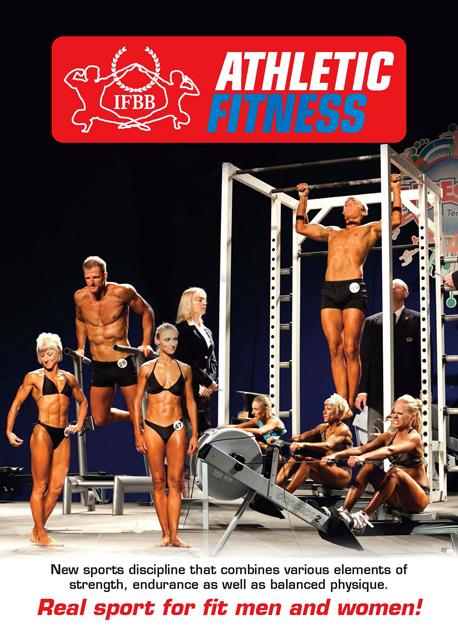
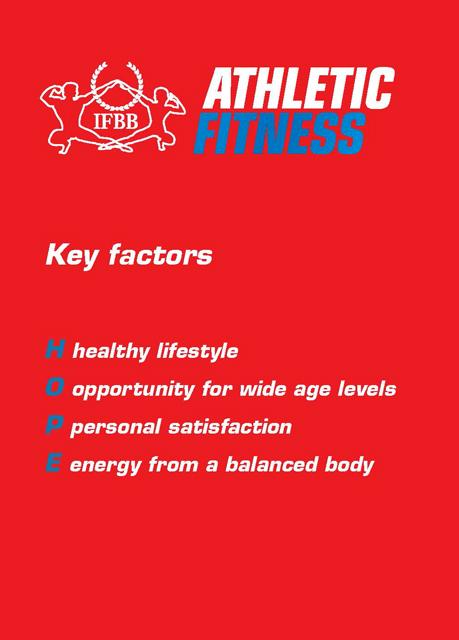
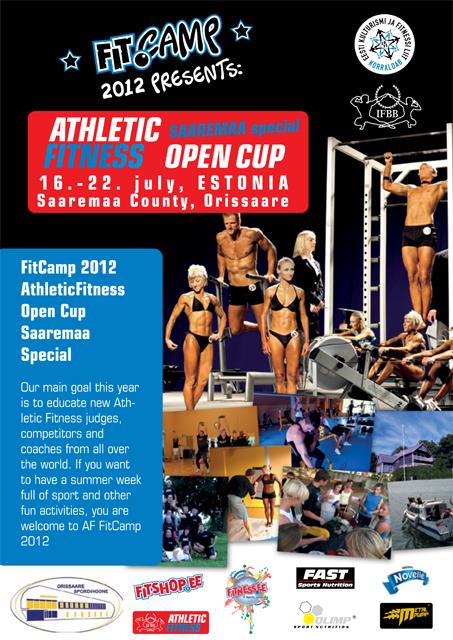
Athletic Fitness is a sports which was introduced to Estonia from the Nordic countries. It has been practiced there for years and it has also been included in Estonian Championships of bodybuilding from 2010.Being included in Arnold Classic Competition, Athletic Fitness is definitely on the verge of a great break-through in the world. It has already won over many ordinary gym-goers in Estonia.
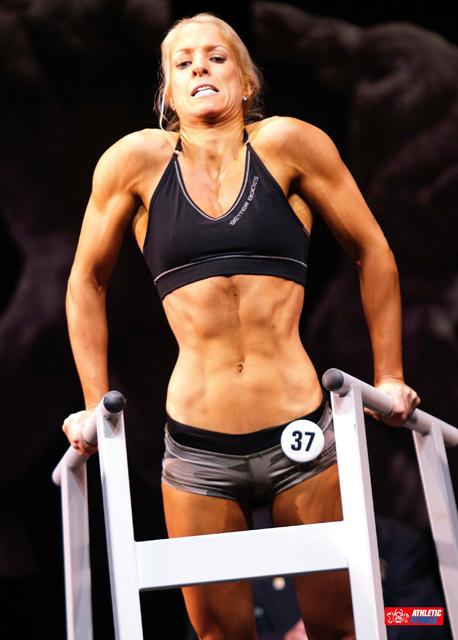
The difference between athletic fitness and bodybuilding is that in addition to body round (quarter turns), athletes must also compete in strength (chins and dips) and endurance (rowing on a rowing machine for 1.30 minutes).
Athletic Fitness, rules in English.
RULES FOR ATHLETIC FITNESS_latest.pdf
Athletic Fitness, reeglid. http://www.fitness.ee/uudis/5291/athleticfitnessi-reeglid-eesti-ja-pohjamaade-meistrivoistlustel-lisatud-taismahus-reeglistik‘>Siin…
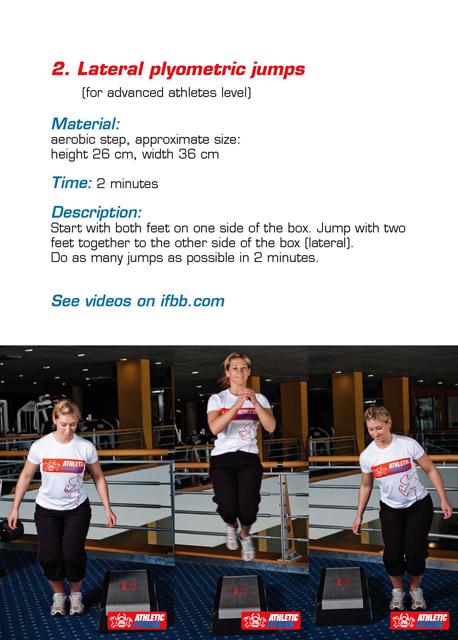
Athletic Fitness, instruction-book for training:
Athletic fitness – in english.pdfAthletic Fitness, juhend treenimiseks:
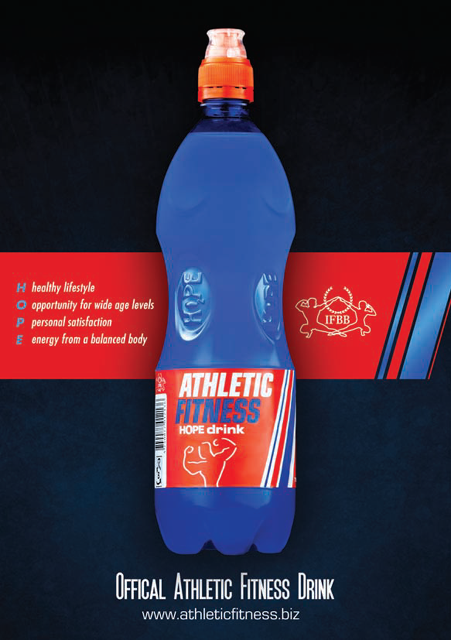
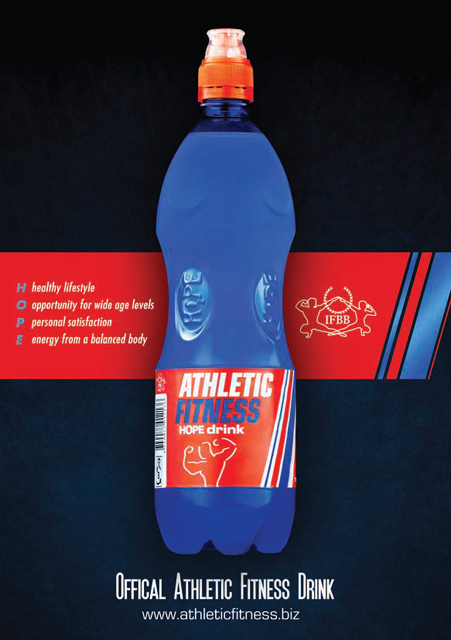
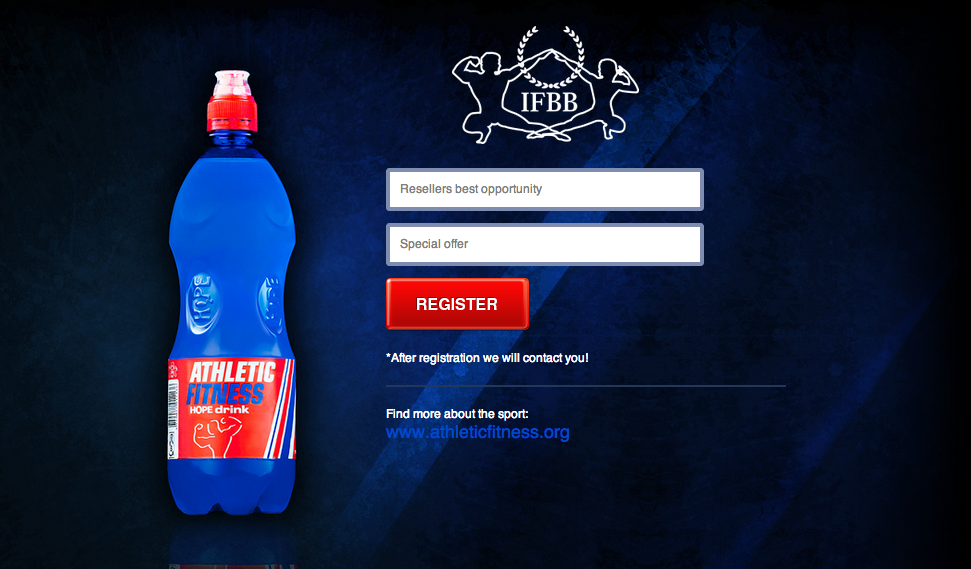
Athletic Fitness juhend.pdfAthletic Fitness HOPE Drink. Here…
Athletic Fitness in Facebook. Here…
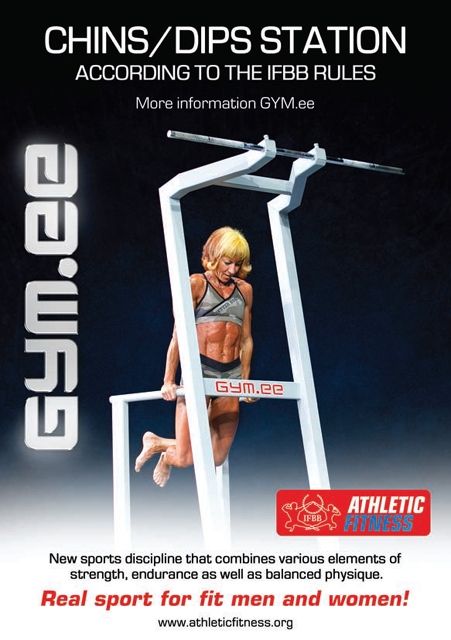
Athletic Fitness station:
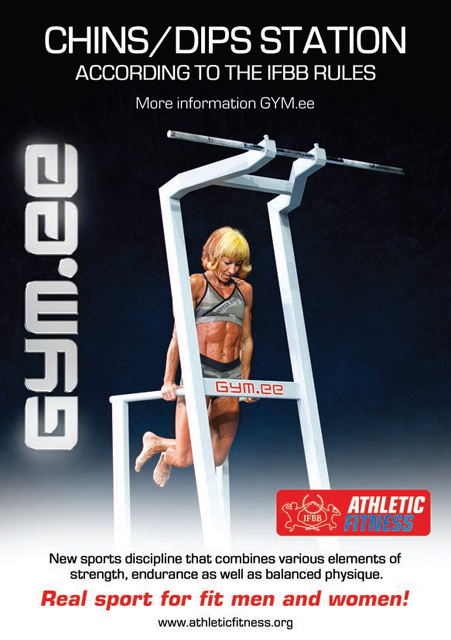
Athletic Fitness
Sport of strength, endurance and body qualityVIDEO:
Athletic Fitness – technique and rules
jaanuar 19, 2012 at 6:29 p.l. #246935MemberIFBB Finland announced that AF will also land in Finland – the first event will be held in the beginning of September at Fitness Expo.
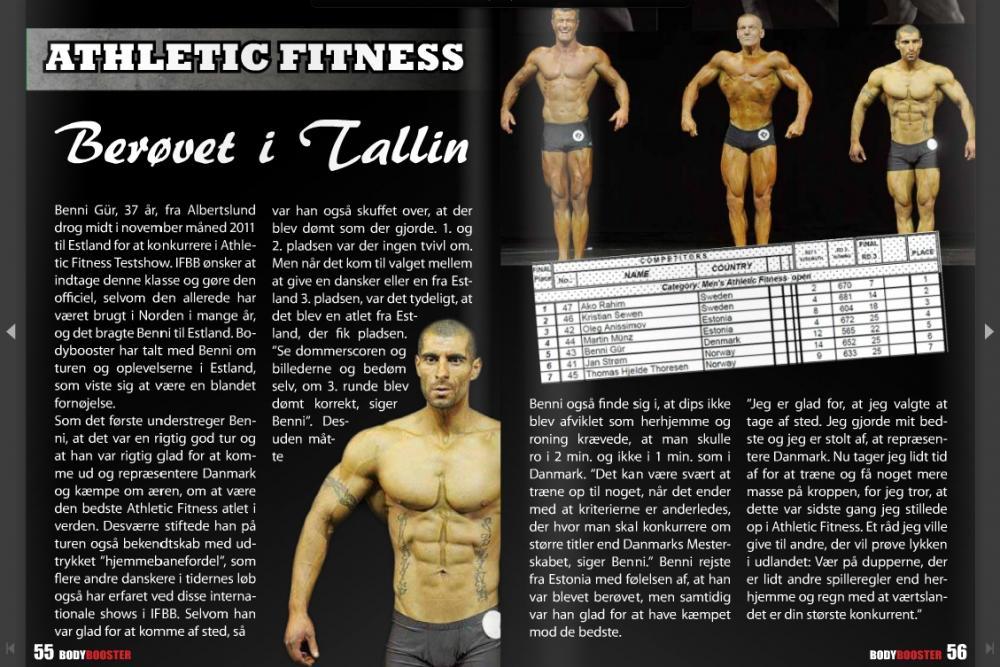
jaanuar 19, 2012 at 6:33 p.l. #246930MemberAF getting some attention in the new issue of Bodybooster magazine as well…
 jaanuar 20, 2012 at 12:39 p.l. #246364
lkv
Memberkas kuskil on näha ka mingit treeningkava vms, mille järgi athletic fitnessi sporltased treenivad?
Võid vaadata AF võistlejate blogisid
Maailma karika võitja Ako Rahimi blogi
Tsekkige näiteks kuidas ta dipse teeb
Tal on super ülevaatlik blogi ja väga palju videosid, mida vaadata. Võite lasta google translate’il inglise keelde tõlkida, siis on rootsi blogid täitsa loetavad.
 ” srcset=”/uploads/emoticons/wink@2x.png 2x” width=”20″ height=”20″>jaanuar 20, 2012 at 12:48 p.l. #246344Member
Competition video:
jaanuar 31, 2012 at 7:10 e.l. #234393Arnold
MemberREEGLID: ATHLETIC FITNESS
EESTI KEELES- veerandpöörete kirjeldus
Vabaseis vasakult küljelt:
Pingevaba sirge seisak, pea ja silmad kehaga ühes suunas, kannad koos, Jalad keeratud 30
kraadi väljapoole, põlved koos ja sirged, kõht sees, rind ees, õlad taga, vasak käsi keha
keskjoonest veidi tagapool ja küünarnukist kergelt kõverdatud, pöial ja sõrmed koos,
peopesa keha suunas, käelaba kergelt peekritaolises asendis, parem käsi keha keskjoonest
veidi eespool ja küünarnukist kergelt kõverdatud, pöial ja sõrmed koos, peopesa keha
suunas, käelaba kergelt peekritaolises asendis. Käte asend põhjustab ülakehal kerge
väände vasakule poole, vasak õlg langetatud ja parem õlg kergitatud. See on normaalne
ning sellega ei tohi liialdada. Tegemist on vabaseisuga, lihaste pingutamine on keelatud.
Võistlejad, kes ei suuda sisse võtta korrektset poosi, saavad hoiatuse pärast mida
arvatakse nende skoorist punkte maha.
Vabaseis tagant:
Pingevaba sirge seisak, pea ja silmad kehaga ühes suunas, kannad koos, Jalad keeratud 30
kraadi väljapoole, põlved koos ja sirged, kõht sees, rind ees, õlad taga, mõlemad käed
vabalt külgedel kehaga ühel keskjoonel, küünarnukid kergelt kõverdatud, pöidlad ja
sõrmed koos, peopesad keha suunas ning kehast umbes 10 cm kaugusel, käelabad kergelt
peekritaolises asendis. Tegemist on vabaseisuga, lihaste pingutamine on keelatud.
Võistlejad, kes ei suuda sisse võtta korrektset poosi, saavad hoiatuse pärast mida
arvatakse nende skoorist punkte maha.
Vabaseis paremalt küljelt:
Pingevaba sirge seisak, pea ja silmad kehaga ühes suunas, kannad koos, Jalad keeratud 30
kraadi väljapoole, põlved koos ja sirged, kõht sees, rind ees, õlad taga, vasak käsi keha
keskjoonest veidi eespool ja küünarnukist kergelt kõverdatud, pöial ja sõrmed koos,
peopesa keha suunas, käelaba kergelt peekritaolises asendis, parem käsi keha keskjoonest
veidi tagapool ja küünarnukist kergelt kõverdatud, pöial ja sõrmed koos, peopesa keha
suunas, käelaba kergelt peekritaolises asendis. Käte asend põhjustab ülakehal kerge
väände paremale poole, vasak õlg kergitatud ja parem õlg langetatud. See on normaalne
ning sellega ei tohi liialdada. Tegemist on vabaseisuga, lihaste pingutamine on keelatud.
Võistlejad, kes ei suuda sisse võtta korrektset poosi, saavad hoiatuse pärast mida
arvatakse nende skoorist punkte maha.
Vabaseis eest:
Pingevaba sirge seisak, pea ja silmad kehaga ühes suunas, kannad koos, Jalad keeratud 30
kraadi väljapoole, põlved koos ja sirged, kõht sees, rind ees, õlad taga, mõlemad käed
vabalt külgedel kehaga ühel keskjoonel, küünarnukid kergelt kõverdatud, pöidlad ja
sõrmed koos, peopesad keha suunas ning kehast umbes 10 cm kaugusel, käelabad kergelt
peekritaolises asendis. Tegemist on vabaseisuga, lihaste pingutamine on keelatud.
Võistlejad, kes ei suuda sisse võtta korrektset poosi, saavad hoiatuse pärast mida
arvatakse nende skoorist punkte maha.
IFBB 2012 jaanuaris kinnitatud Athletic Fitnessi reeglid eestikeeles: SIIN
veebruar 3, 2012 at 3:13 p.l. #228793BRIKI
MemberRULES: ATHLETIC FITNESS
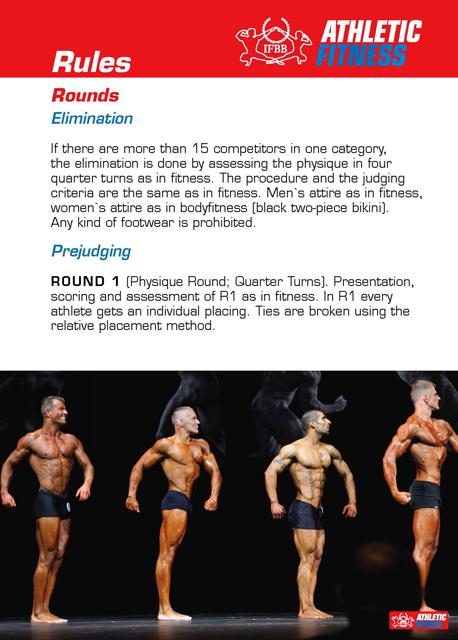
Rounds
Elimination. If there are more than 15 competitors in one category, the elimination is done
by assessing physique in four quarter turns as in fitness. The procedure and the judging
criteria are the same as in fitness. Men`s attire as in fitness, women`s attire as in bodyfitness
(black two-piece bikini). Any kind of footwear is prohibited.
Prejudging
Round 1 (Physique Round; Quarter Turns). Presentation, scoring and assessment of R1 as
in fitness. In R1 every athlete gets an individual placing. Ties are broken using the relative
placement method.
Round 1
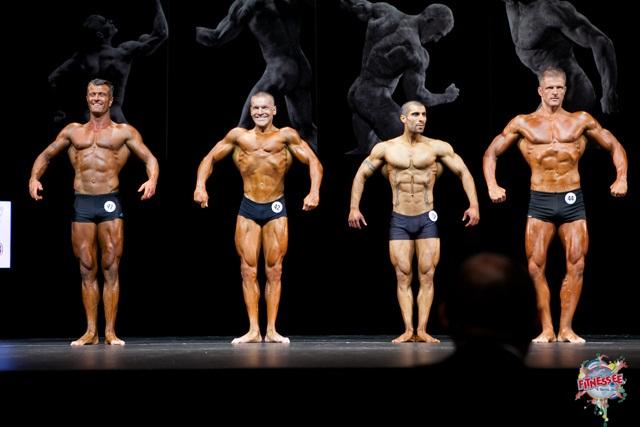
Prejudging
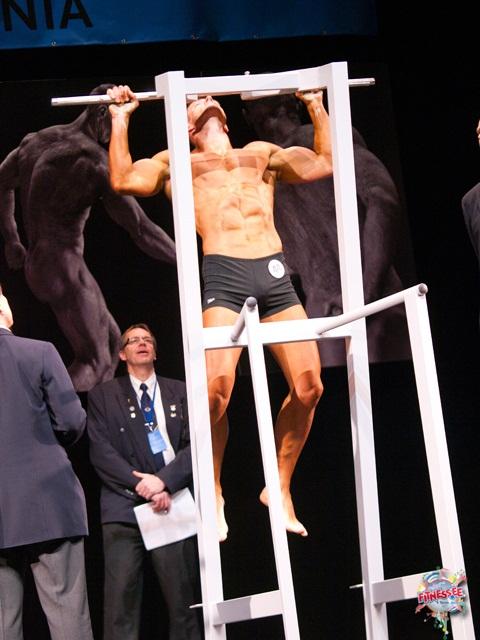
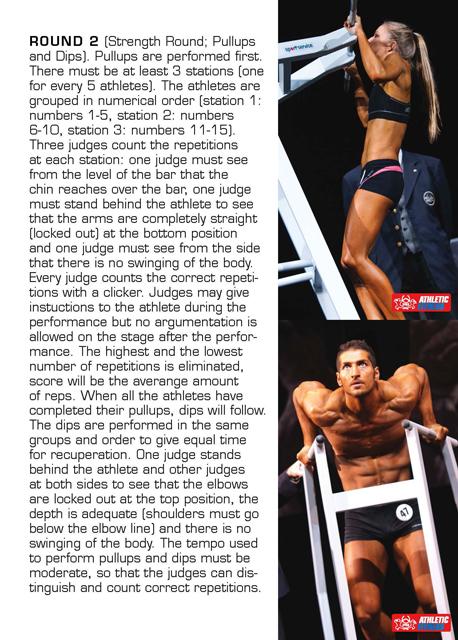
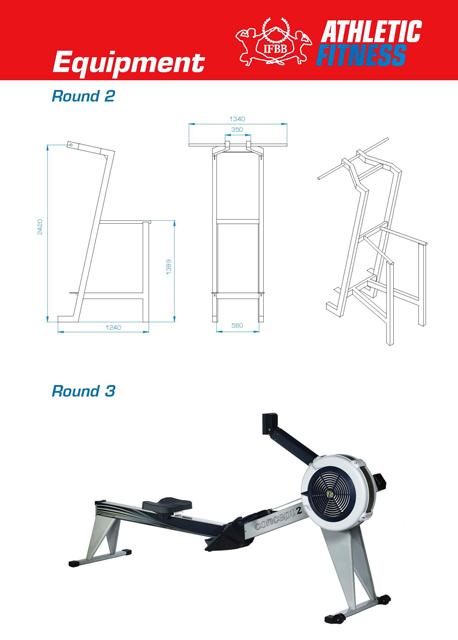
Round 2 (Strength Round; Pullups and Dips). Pullups are performed first. There must be at
least 3 stations (one for every 5 athletes). The athletes are grouped in numerical order
(station 1: numbers 1-5, station 2: numbers 6-10, station 3: numbers 11-15). Three judges
count the repetitions at each station: one judge must see from the level of the bar that the
chin reaches over the bar, one judge must stand behind the athlete to see that the arms are
completely straight (locked out) at the bottom position and one judge must see from the side
that there is no swinging of the body. Every judge counts the correct repetitions with a
„clicker“. Judges may give instuctions to the athlete during the performance but no
argumentation is allowed on the stage after the performance. The highest and the lowest
number of repetitions is eliminated, score will be the averange amount of reps. When all the
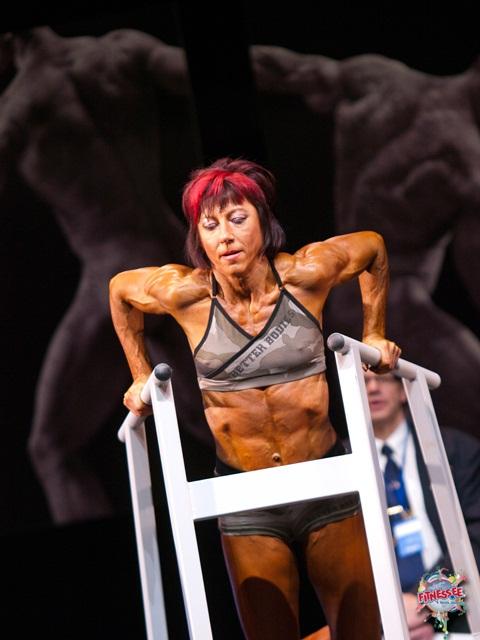
athletes have completed their pullups, dips will follow. The dips are performed in the same
groups and order to give equal time for recuperation. One judge stands behind the athlete
and other judges at both sides to see that the elbows are locked out at the top position, the
„depth“ is adequate ( shoulders must go below the elbow line) and there is no swinging of
the body. The tempo used to perform pullups and dips must be moderate, so that the judges
can distinguish and count correct repetitions.
Scoring of Round 2. According to the number of reps, each athlete will get a place in
pullups and a place in dips. If two or more athletes have the same number of repetitions,
they will get the same place. the Place in Round 2 = the place in pullups + the place in dips.
Ties will not have to be broken in this round.
Round 2
Prejudging
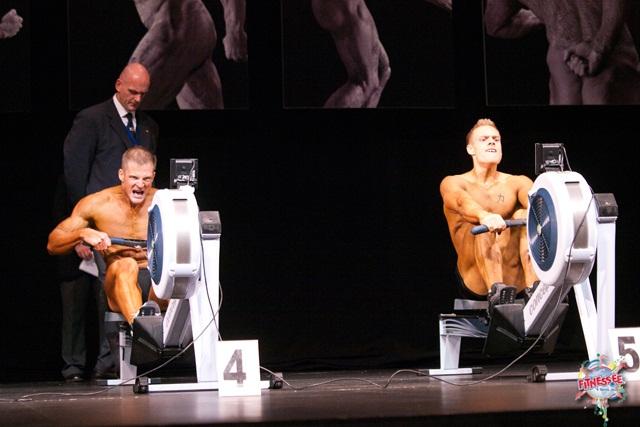
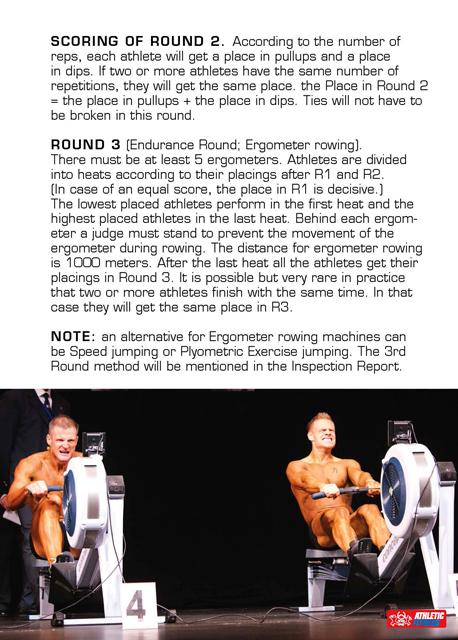
Round 3 (Endurance Round; Ergometer rowing). There must be at least 5 ergometers.
Athletes are divided into heats according to their placings after R1 and R2. (In case of an
equal score, the place in R1 is decisive.) The lowest placed athletes perform in the first heat
and the highest placed athletes in the last heat. Behind each ergometer a judge must stand
to prevent the movement of the ergometer during rowing. The distance for ergometer rowing
is 1000 meters. After the last heat all the athletes get their placings in Round 3. It is possible
but very rare in practice that two or more athletes finish with the same time. In that case
they will get the same place in R3.
Round 3
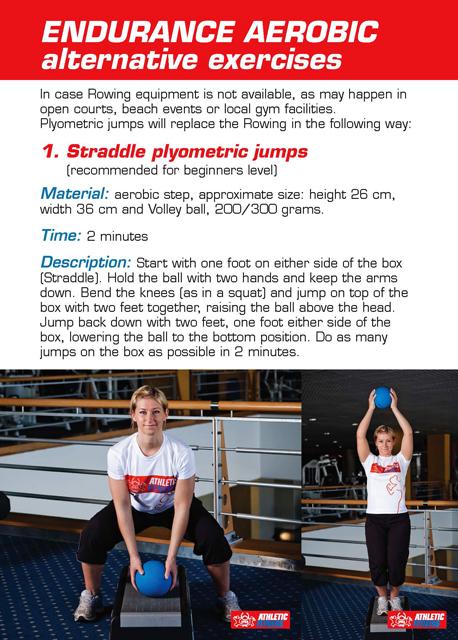
NOTE: an alternative for Ergometer rowing machines can be Speed jumping or Plyometric
Exercise jumping. The 3rd Round method will be mentioned in the Inspection Report.
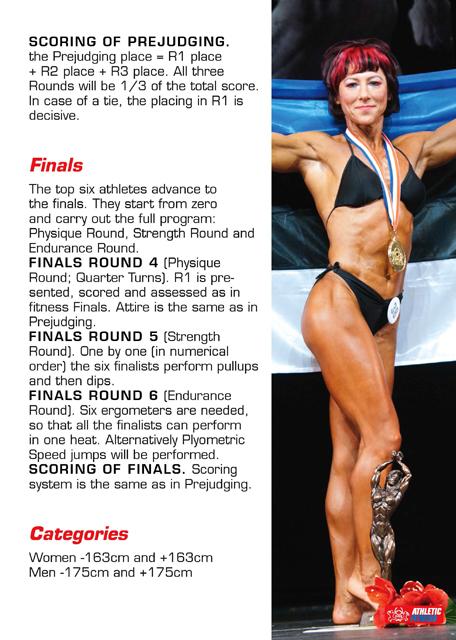
Scoring of Prejudging. the Prejudging place = R1 place + R2 place + R3 place. All three
Rounds will be 1/3 of the total score. In case of a tie, the placing in R1 is decisive.
FINALS
The top six athletes advance to the finals. They start from „zero“ and carry out the full
program: Physique Round, Strength Round and Endurance Round.
Finals Round 4 (Physique Round; Quarter Turns). R1 is presented, scored and assessed
as in fitness Finals. Attire is the same as in Prejudging.
Finals Round 5 (Strength Round). One by one (in numerical order) the six finalists perform
pullups and then dips.
Finals Round 6 (Endurance Round). Six ergometers are needed, so that all the finalists can
perform in one heat. Alternatively Plyometric Speed jumps will be performed.
Scoring of Finals. Scoring system is the same as in Prejudging.
Categories
Women -163cm and +163cm
Men -175cm and +175cm
Descriptions of technique
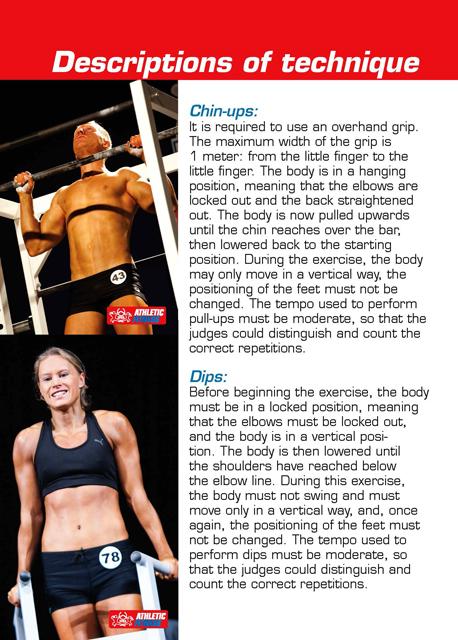
Chin-ups:
It is required to use an overhand grip. The maximum width of the grip is 1 meter : from the
little finger to the little finger. The body is in a hanging position, meaning that the elbows are
locked out and the back straightened out. The body is now pulled upwards until the chin
reaches over the bar, then lowered back to the starting position. During the exercise, the
body may only move in a vertical way, the positioning of the feet must not be changed. The
tempo used to perform pull-ups must be moderate, so that the judges could distinguish and
count the correct repetitions.
Dips:
Before beginning the exercise, the body must be in a locked position, meaning that the
elbows must be locked out, and the body is in a vertical position. The body is then lowered
until the shoulders have reached below the elbow line. During this exercise, the body must
not swing and must move only in a vertical way, and, once again, the positioning of the feet
must not be changed. The tempo used to perform dips must be moderate, so that the judges
could distinguish and count the correct repetitions.
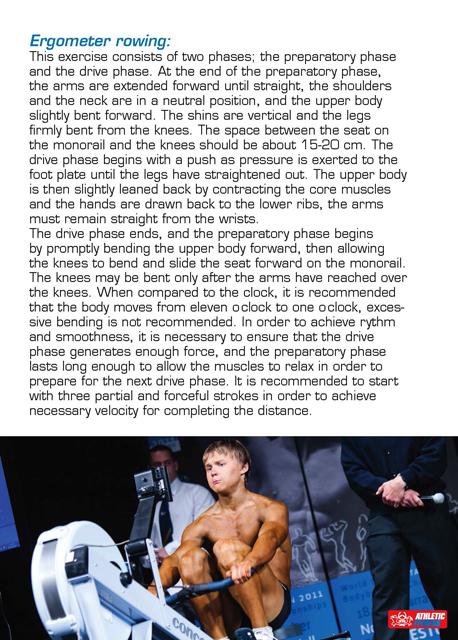
Ergometer rowing:
This exercise consists of two phases—the preparatory phase and the drive phase. At the
end of the preparatory phase, the arms are extended forward until straight, the shoulders
and the neck are in a neutral position, and the upper body slightly bent forward. The shins
are vertical and the legs firmly bent from the knees. The space between the seat on the
monorail and the knees should be about 15-20cm. The drive phase begins with a push as pressure is exerted to the foot plate until the legs have straightened out. The upper body is
then slightly leaned back by contracting the core muscles and the hands are drawn back to
the lower ribs, the arms must remain straight from the wrists.
The drive phase ends, and the preparatory phase begins by promptly bending the upper
body forward, then allowing the knees to bend and slide the seat forward on the monorail.
The knees may be bent only after the arms have reached over the knees. When compared
to the clock, it is recommended that the body moves from eleven o’clock to one o’clock,
excessive bending is not recommended. In order to achieve rythm and smoothness, it is
necessary to ensure that the drive phase generates enough force, and the preparatory
phase lasts long enough to allow the muscles to relax in order to prepare for the next drive
phase. It is recommended to start with three partial and forceful strokes in order to achieve
necessary velocity for completing the distance.
veebruar 3, 2012 at 6:15 p.l. #228361MemberFor the first time ever, AF will be officially at IFBB Women’s European Championships, including classes for both women and men.
http://www.ifbb.com/…lish&prov=index
This event will take place from May 11th to May 14th, 2012.These Championships will include a new sport: athletic fitness, with the following categories:
– Women: up to 163 cm and over 163 cm
– Men: up to 175 cm and over 175 cm
Each of these categories will consist of the following rounds:
– Elimination Round (if more than 15 athletes): physique assessment (quarter turns)
Semifinals (top 15):
– Round 1: physique assessment (quarter turns)
– Round 2: strength performance (pull-ups and dips) for maximum number of reps
– Round 3: endurance performance (machine rowing for 1000 m)
Finals (top 6):
– Round 4: physique assessment (quarter turns)
– Round 5: strength performance (pull-ups and dips) for maximum number of reps
– Round 6: endurance performance (machine rowing for 1000 m)
IFBB will register separate records of number of reps in pull-ups and dips.
aprill 20, 2012 at 6:35 p.l. #133760Member
Facebook
mai 2, 2012 at 11:16 e.l. #119467MemberBOOKLET
 mai 2, 2012 at 11:35 e.l. #119354Memberjuuni 7, 2012 at 1:15 p.l. #82897juuni 14, 2012 at 9:04 e.l. #74370Member
 juuli 7, 2012 at 7:21 e.l. #319493oktoober 12, 2012 at 8:53 e.l. #326743Member
 -
AutorPostitused
- You must be logged in to reply to this topic.